
Prima di iniziare, questo è un breve riassunto delle tematiche trattate: vengono indagate le differenze tra innovazione e “doping tecnologico” nello sport, analizzando come le attrezzature utilizzate stiano ridefinendo i limiti delle prestazioni umane. Attraverso test in laboratorio e analisi di casi storici, lo speaker esplora i criteri utilizzati per decidere quando un vantaggio tecnico smette di essere progresso, e diventa una minaccia per l’imparzialità della competizione.
Le soluzioni sono indicate sotto ogni porzione del video!
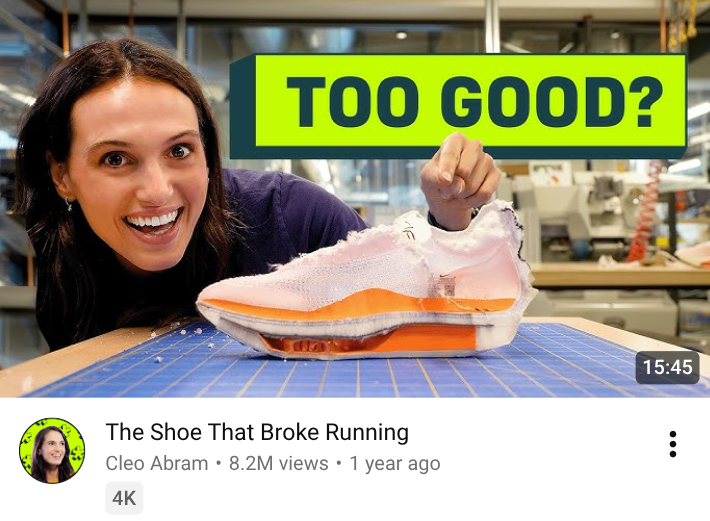
Esercizio: The shoe that broke running
Esercizio tratto da questo video YouTube: se ti interessa l’argomento, il modo migliore per allenarti alla prova di listening, è proprio quello di guardare il video interamente!
Extract one
You hear a speaker giving an overview about technology in sports.
1. Why does the speaker mention items like gloves and baseball bats?
A. To show how they have evolved over the last century.
B. To illustrate when equipment provides an unacceptable advantage.
C. To explain why certain materials have been recently invented.
2. What is the speaker’s main point regarding the debate over technology?
A. It is hard to distinguish between progress and unfairness.
B. Athletes should return to more traditional ways of competing.
C. Technology in sports is less advanced than in other areas of life.
SOLUZIONI (Clicca per espandere)
Question 1: B.
Question 2: A.
Extract two
You hear a discussion about how regulators decide which gear to ban.
3. According to the speaker, aluminum bats were prohibited in professional baseball because
A. they gave hitters an unfair mechanical advantage.
B. they were too expensive for all teams to afford.
C. they posed a significant safety risk to participants.
4. What does the speaker imply about the introduction of swimming goggles in the 1970s?
A. They were initially rejected for being against the “spirit of the sport.”
B. They caused a noticeable shift in the performance of those who used them.
C. They were only allowed after they became popular with the general public.
SOLUZIONI (Clicca per espandere)
Question 3: C.
Question 4: B.
Extract three
You hear a description of a controversial swimsuit used in 2008.
5. What was a common belief about the Speedo LZR racer?
A. Its fabric was made from actual biological materials.
B. It helped athletes maintain a better position on the water’s surface.
C. It was designed primarily to protect swimmers from skin irritation.
6. How does the speaker feel about the current ban on these swimsuits?
A. She thinks the rules lack a clear and consistent logic.
B. She believes the ban was necessary to protect world records.
C. She is relieved that swimmers have returned to natural materials.
SOLUZIONI (Clicca per espandere)
Question 5: B.
Question 6: A.
Extract four
You hear about the rules implemented to regulate “super shoes” in running.
7. What was one of the requirements established by regulators regarding racing shoes?
A. They must be manufactured by more than one brand.
B. They have to be on the market for several months before a race.
C. They cannot contain any synthetic materials in the foam.
8. In the speaker’s interview with the Nike representative, his view is that
A. brands should focus on making the fastest athletes even faster.
B. regulations are helpful for maintaining the tradition of running.
C. it is their duty to continue expanding the boundaries.
SOLUZIONI (Clicca per espandere)
Question 7: B.
Question 8: C.
Extract five
You hear a discussion about a runner named Blake Leeper and the use of prosthetics.
9. Why did the case of Blake Leeper differ from that of Oscar Pistorius?
A. Leeper’s technology was considered significantly more advanced.
B. Leeper had failed to qualify through the standard athletic channels.
C. Authorities decided it was time to re-examine the existing rules.
10. What did the testing reveal about Blake Leeper’s athletic performance?
A. His prosthetics were beneficial only during the final sprint.
B. The blades gave him a clear advantage when running around bends.
C. Certain aspects of his movement were actually hindered by the gear.
SOLUZIONI (Clicca per espandere)
Question 9: C.
Question 10: C.
Extract six
You hear the conclusion of the story about Blake Leeper and the future of sports tech.
11. Blake Leeper criticizes the “MASH rule” because
A. it ignored his unique physical reality from birth.
B. the height limit was based on an outdated historical average.
C. it was applied differently to athletes of different ethnicities.
12. What does Blake believe is the real motivation behind his disqualification?
A. a worry that non-disabled athletes will eventually be outperformed.
B. a personal disagreement with the Olympic committee.
C. a lack of funding for research into prosthetic efficiency.
SOLUZIONI (Clicca per espandere)
Question 11: A.
Question 12: A.
Vuoi allenarti ancora?
Vai al prossimo esercizio!
🚀
Pensi ci sia qualche errore nelle domande o nelle risposte?
Scrivi a info@giacomodandria.com.